


- INTERVIEW
Interview with Nikkei
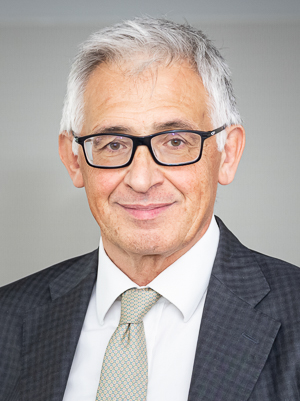
Interview with Piero Cipollone, Member of the Executive Board of the ECB, conducted by Takerou Minami on 26 November 2025
4 December 2025
Why is the digital euro needed in Europe now?
The use of cash is declining because we cannot use it to pay digitally. This clearly limits people’s freedom to pay with central bank money – which currently only exists in the form of physical cash. If we do not complement it with a digital form of cash, we are, in a way, discriminating against central bank money at the retail level.
We are concerned about what would happen in an economy in which there is no access to money issued by the central bank at the retail level. We have not experienced such a situation for a long time. Central bank money is the anchor for the whole financial system, yet we do not currently have a single European solution for every type of digital payment that would allow all Europeans to pay anywhere in the euro area – the only European option that allows you to pay everywhere in the euro area is cash.
In many euro area countries, people have to rely on non-European solutions to pay digitally, notably international card schemes. This means that if people want to buy milk at the supermarket in the morning, they either carry cash or they have to use an international card scheme. This is a big concern for us, because we are responsible for the smooth functioning of the payment system. What if there is a major problem with a payment system that does not come under the euro area’s jurisdiction? We need to make sure that Europeans have one European solution that allows them to pay digitally throughout the euro area. Like cash, but digital.
In what ways could a digital euro strengthen Europe’s unity and autonomy?
Cash was king ten years ago. Euro cash has been a symbol of unity for Europe, but now it risks losing its significance. By combining cash with a digital euro, we would be returning to the world we used to have, where you could pay for anything, anywhere with central bank money. This would reinforce the resilience of the system and, at the same time, our strategic autonomy.
How do you view the historical significance of the digital euro, in light of the changing post-war international order?
It is a natural evolution. We started with cheques, which were later replaced by debit cards, now we have mobile payments and tomorrow, potentially, stablecoins. Following this evolution, it would be absurd if the central bank did not adjust the offering of its main product – money.
The Bank for International Settlements warned about the risks that stablecoins pose to monetary sovereignty and financial stability.
Stablecoins are a new way to mobilise private savings. But they have a unique feature, which is that they represent commodity money rather than credit money. The provision of stablecoins depends on the collateral you have. Because each stablecoin needs to be backed one-to-one by underlying assets, their supply is more rigid than money that is issued by commercial banks. And because the value of the underlying assets might change, stablecoins can be exposed to runs. This could cause financial stability problems.
Some European banks are considering euro-denominated stablecoins.
This is important because euro-denominated stablecoins carry less risk than US dollar-denominated ones. If a stablecoin is denominated in a different currency to that of the country where it is issued, this results in currency substitution and creates risks for monetary sovereignty. Still, euro-denominated stablecoins might be subject to the same risk of a lack of flexibility I was discussing before.
As a central banker, how concerned are you about economic security threats? US President Donald Trump has repeatedly made hostile remarks against the EU.
The digital euro is a strategic project that is deeply rooted in the digital transformation of our economy. The project has its own life and motivations, independent of what is happening outside the eurozone.
What kind of user benefits and use cases do you see?
We aim to address all use cases, which means payments from person to person, in e-commerce, in shops and possibly also from and to the government. What are the benefits for individuals? First, simplicity, because you can cover all your needs with one means of payment. Second, a digital euro would allow people to pay offline even if there is no electricity or internet. This would increase resilience.
The most immediate benefit for merchants would be that their service costs would decline. The fees merchants pay to international credit card schemes increased from 0.27% in 2018 to 0.44% in 2022. With a digital euro, merchants would be in a better position when negotiating with international card schemes.
There are more than 300 million people in the eurozone, but how many of them would you expect to use a digital euro?
That is a very good question. We are working on understanding what the take-up rate would be. The information we have so far is that 66% of those who have an idea of what the digital euro would be say that they would be interested in using it. Of course, this number has to be tested once we launch a campaign explaining what it would be and how exactly it would work. But this is a credible number.
Would travellers from Japan be able to use the digital euro in Italy or Germany?
So far, the legislation foresees that visitors to the euro area, including tourists, would be able to make digital euro payments through European payment service providers.
Will the legislation be in place in time for the potential issuance in 2029?
The European Commission put forward the regulation on the digital euro in June 2023. Two bodies are currently examining it: the Council of the European Union, which represents EU Member States, and the European Parliament. They have to examine this piece of legislation and propose amendments or changes. Then they sit together and come up with the final legislation. The amendment process in the Parliament has just started. We are working on the assumption that the legislation will be adopted in 2026.
How confident are you that the legislation will be in place by 2026?
I am growing more confident by the day. During both the March and the October Euro Summit, we received strong support from the Heads of State, who called this a strategic project for Europe. I see momentum building here, and the EU Council aims to agree its position on the legislation by the end of the year.
The ECB is apparently gathering insights from eurozone countries, including the three Baltic States that border Russia. How do you deal with the threat of cyberattacks?
The Baltic Member States had some important proposals relating to resilience that they brought to the Council Working Party and that have been taken on board. We are reflecting this in the technical design of the digital euro. In terms of specific architecture, we are building a system that uses three different sites, each with multiple servers. The systems work in parallel, so that if one of the sites is down, service is not disrupted.
How would you address money laundering problems?
The approach would not differ much from what we do today. The anti-money laundering checks would be performed by the banks and other payment service providers. Essentially, when you make a payment with the digital euro, you use the app from the ECB or from your bank. Your interaction with the bank would be very much like it is today. That’s where the checks regarding anti-money laundering and countering the financing of terrorism occur.
In terms of privacy, the ECB would see three numbers on the ledger of the digital euro: an encrypted code that represents the payer, the amount paid, and an encrypted code that represents the payee. But the link between the identity of the person and the code would only be known to the bank or payment company, not to the central bank.
So it would be impossible for us to attribute a payment to a specific person, because all we would see is an anonymised code.
What is your view on holding limits?
The digital euro would be a kind of banknote, so any restrictions on digital euro holdings need to be proportionate. However, holding limits would ensure that people do not move excessive amounts of money from their bank account to the digital euro wallet, which could be destabilising for banks. With holding limits, we want to minimise this risk while preserving people’s freedom to use the digital euro. We don’t want to jeopardise financial stability. At the same time, the user experience will be seamless for consumers as they will be able to pay sums higher than the holding limit by linking their digital euro wallet to their commercial bank account.
Would it be acceptable to set the limit at €3,000?
We would reassess all of this when we move closer to actually issuing the digital euro, but a study we published recently showed that with this limit there wouldn’t be any financial stability problems.
Would you consider sharing the technology and the knowledge gained in the digital euro project with other central banks such as the Bank of Japan?
Once we have overcome some problems, this becomes public knowledge. We will be more than happy to share know-how and discuss the technology with the Bank of Japan. More broadly, we are always exploring ways to improve payments together: for example, we are currently working together on a project steered by the Bank for International Settlements, called Agora, which aims to make cross-border payments faster and cheaper. We also work together in many groups at the G7 level, so we regularly share our assessments.
So is it possible to share such knowledge with the Bank of Japan?
It is. If we’re approached, we will be more than willing to interact, discuss and share.
The ECB has kept its deposit facility rate at 2%. Is it appropriate to maintain this rate at the December meeting?
We make decisions meeting by meeting, and they’re based on the information we have. Compared with the last Governing Council, it seems to me that risks around the central projection are more balanced. You may remember there was some concern that the economy could do worse than projected in the main scenario. But the economy has been resilient.
In our September projection, we expected inflation to be below target in 2026 and 2027. As you know, for us it is key that we go back to target in the medium term. The December projections will extend our forecasting horizon to 2028. But risks around inflation seem balanced and our central scenario seems more and more credible. So for the time being – as the President has said several times – we are in a good place. And we stand ready to react to any shock.
Is it premature to declare an end to rate cuts?
There are still many risks in the pipeline. For example, we haven’t seen the full effect of tariffs on the European economy. We know that there is pressure on the import side from the Chinese goods that are being redirected from the United States to Europe. The financial boost coming from higher expenditure, especially in Germany, might not manifest itself with the intensity that we are expecting. For the recovery of consumption, we are assuming that the savings rate will go down, but this assumption has yet to be tested. If it doesn’t materialise, we will need to act.
The Japanese yen has slumped to a new record low against the euro. The Japanese Government may decide to intervene in the foreign exchange market to support the weak yen. Would that be acceptable from the ECB’s point of view?
The G7 communiqué on exchange rates uses very clear language. It says, among other things, that we are committed to “market determined exchange rates,” to “consult closely in regard to actions in foreign exchange markets” and that “we will not target exchange rates for competitive purposes.” We will stick to that.
Bank Ċentrali Ewropew
Direttorat Ġenerali Komunikazzjoni
- Sonnemannstrasse 20
- 60314 Frankfurt am Main, il-Ġermanja
- +49 69 1344 7455
- media@ecb.europa.eu
Ir-riproduzzjoni hija permessa sakemm jissemma s-sors.
Kuntatti għall-midja